

Like many newcomers, Gladys Rosana arrived in Canada with a deep knowledge of farming, but no land to grow on. That changed thanks to Petersburg Community Garden, a 20-acre site that offers dozens of Waterloo Region residents a space to grow their own food, find community, and reclaim a sense of food sovereignty and self-reliance.
From Kenya to Canada
As a child in Kenya, Gladys grew up on a 10 acre farm that provided nearly everything her family ate.
“There was not a day my mom went to the market to buy vegetables,” she recalls. “We always grew our own.”
But after immigrating to Canada in December 2017, Gladys found that a self-sufficient lifestyle was much more difficult to maintain. Although Waterloo Region has an abundance of farmland, much of it remains out of reach, especially for newcomers. Urban sprawl, zoning laws, lack of transportation, and the absence of long-term lease options are all factors that leave low-income and immigrant communities with few opportunities to grow their own food.
“Even people who want to garden often can’t find land,” Gladys explains. “I was on a waitlist for over three years.”
Space to Grow
Determined to keep her traditions alive, Gladys began searching for a place to grow food. She found one, then another small community garden plots, yielding tomatoes, onions, squash, peas, and more.
Then came a game-changing opportunity. After speaking with Doug Jones, coordinator of the Waterloo Region Community Garden Network, Gladys learned of a new garden being launched on a farm in Baden, which could give her the space she needed to grow food, not as a hobby but as a way of life..
Today, she cultivates a quarter-acre plot (1011 square metres) at the new site of Petersburg Community Garden, just outside of Kitchener.
Originally launched as a pilot project, the Petersburg Community Garden now provides land for over three dozen individuals and local organizations, with plots up to an acre in size. The garden is home to a diverse community of growers including many newcomers to Canada. Though members each bring their own traditions and agricultural knowledge, they often exchange seeds, tools, advice, and encouragement, discovering shared connections through the soil.
Gladys estimates that the garden now supplies around 80% of her household’s produce. Beyond enjoying fresh food throughout the growing season, she preserves much of her harvest so her pantry and freezer are well-stocked year-round.
“I don’t buy tomatoes, peas, or vegetables,” she says. “My freezer is full by the end of the season, and I still have some left when the new harvest comes. If I lost my job, I’d still have food in the house. That’s what food sovereignty means to me.”
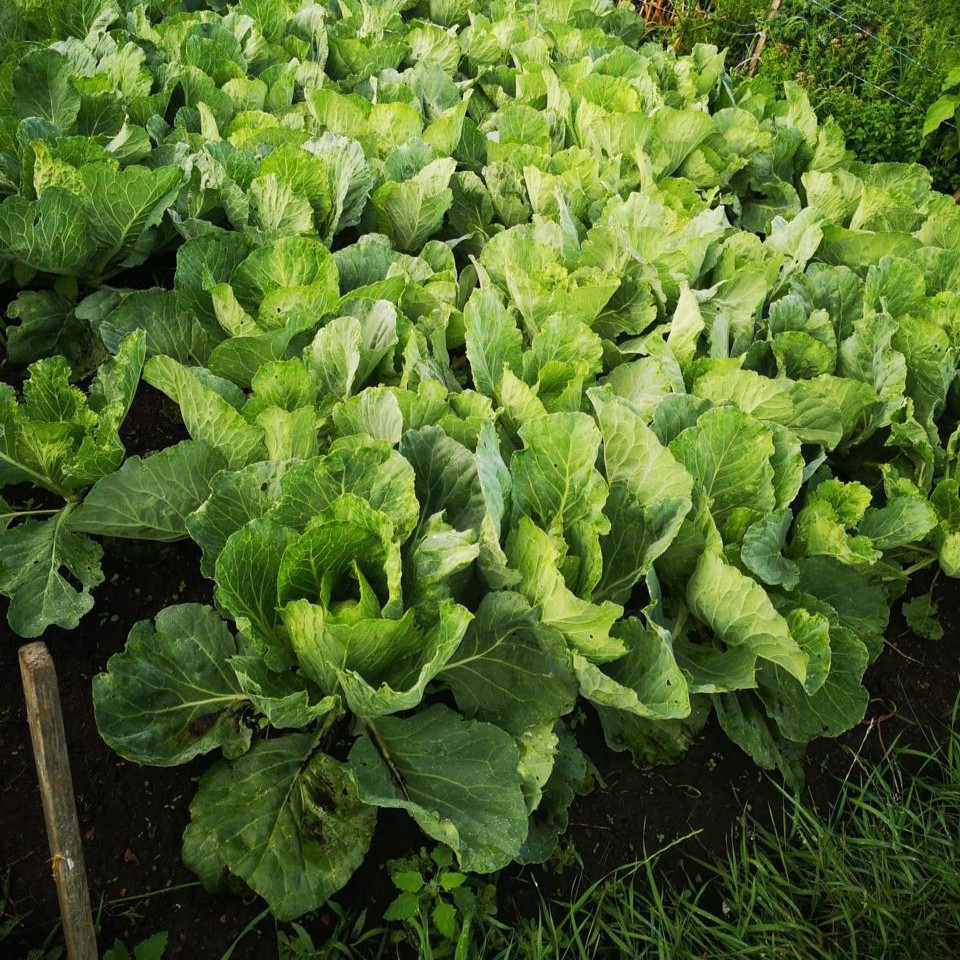
Her story is a powerful reminder of how even a modest plot can transform lives in a region where over one in ten households struggles with food insecurity, and where emergency food programs continue to see rising demand. In a time when isolation and systemic barriers disproportionately affect newcomers, community gardens can also be a place of support, inclusion, and well-being.
“Even just a small space—one-eighth of an acre—can help someone grow enough food to make a real difference.”
A Model for Sustainability
As a member of the Waterloo Region Community Gardens Network and Farm Manager for Petersburg Garden, Gladys is working to ensure the long-term success of the project and give more people the opportunity she has had. She advocates for expanded access to land, improved irrigation, and building soil health through compost and manure—all essential to keeping the garden sustainable and organic.
Her vision is to help more people achieve the same food security and self-reliance she has found. Interest is growing—last year, people began showing up at the farm asking to buy fresh produce. This year, organizers are hoping to set up a small market close to the farm, where growers can sell surplus vegetables directly to the community. They’re also exploring connections to local farmers’ markets to create economic opportunities for growers who might otherwise struggle to access traditional retail systems.
“We’re trying to make the garden sustainable—for our families, and for the wider community,” Gladys explains.
A Seed of Hope, Planted in New Soil
For Gladys, her time in the garden is about reclaiming a way of life—and creating space for others to thrive. All it takes to start making a difference is a seed, a bit of soil, and a community to help it grow. “Start small,” Gladys says. “Even one pot of herbs can be the beginning of something much bigger.”
Do you have extra land near urban areas of Waterloo Region? You could help local small farmers like Gladys by renting out your space through Waterloo Region Community Garden Network. Reach out to learn more.